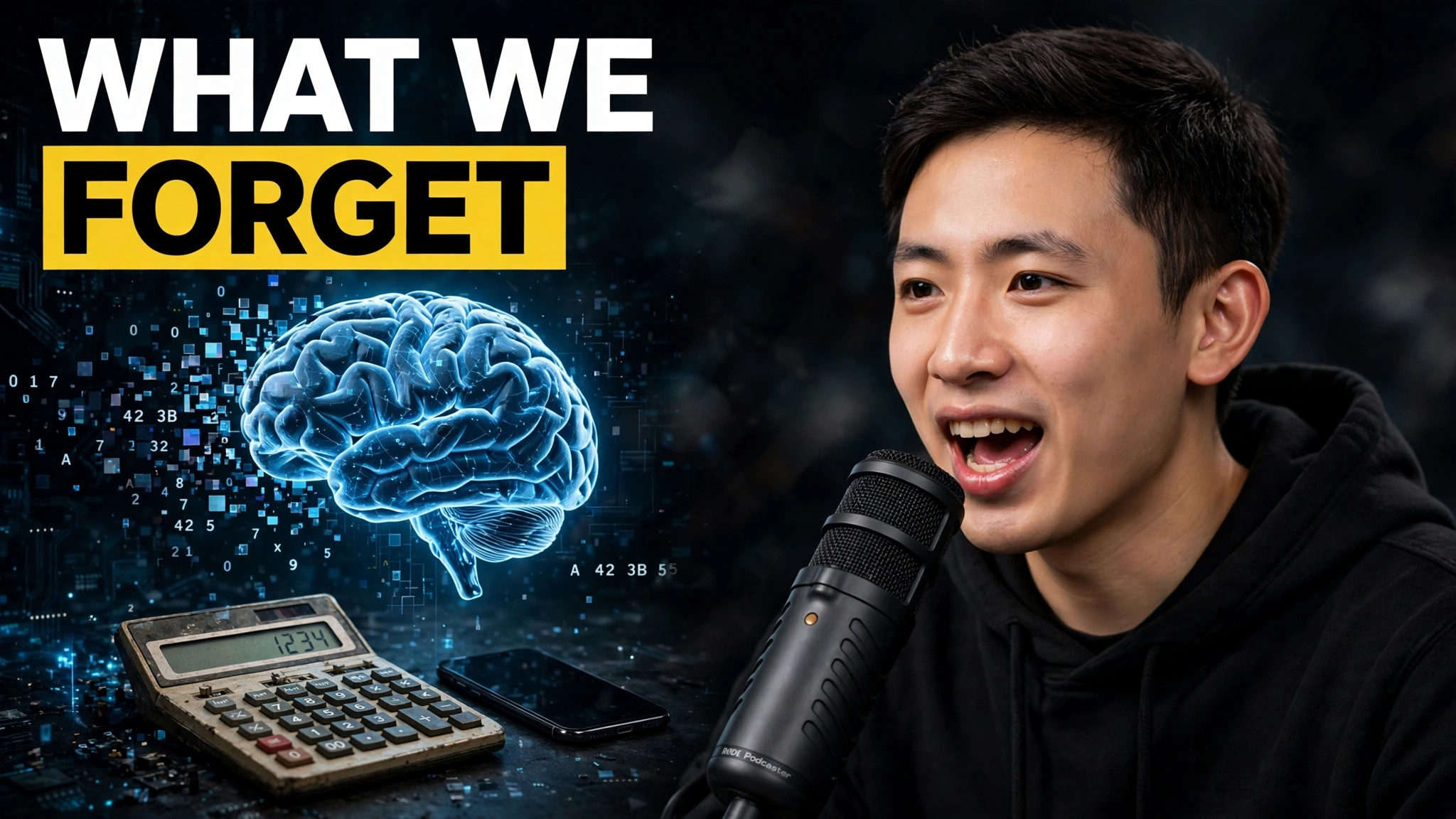
We forgot arithmetic when calculators came, phone numbers when mobiles came, and now something bigger is being handed over. The question is what to keep.
Every generation outsources a piece of its mind and then mourns it.
When electronic calculators spread, students forgot arithmetic drills their grandparents could do in their sleep. When mobile phones arrived, we forgot phone numbers — ask almost anyone to recite a close friend's number today and watch the silence. Each time, the trade felt harmless. The machine remembers, so we don't have to.
Now the outsourcing has reached a different layer. It is no longer numbers we are handing over. It is drafting, summarizing, deciding — pieces of thinking itself. And some scientists are warning that if we stop reproducing knowledge, we may eventually stop being able to.
Forgetting is the feature, until it isn't
Cognitive offloading is not new, and it is not stupid.
Nobody seriously wants to return to memorizing entire phone books. Freeing memory from storage means the mind can spend itself on judgment, connection, and creation. Every tool from the notebook to the search engine works this way, and civilization is built on it.
The catch is that some "storage" was secretly exercise. Memorizing numbers kept number fluency alive. Writing essays by hand — slowly, badly, yourself — was not just producing text; it was building the ability to think in sentences. When the machine does the rep, the muscle quietly stops training.
This is the serious version of the AI worry now being voiced by researchers: not that machines become conscious, but that humans stop practicing the skills that produce knowledge, until a generation arrives that can operate the tools but cannot rebuild, verify, or extend what the tools say.
Meanwhile, the machines are learning to remember
The irony of the moment is hard to miss.
While human memory practice declines, machine memory is the hottest frontier in technology. New AI architectures are celebrated precisely for remembering more, longer, and in more structured ways, and faster memory chips are built to feed them. We are constructing the most powerful remembering machines in history at exactly the moment we practice remembering least.
That does not make the machines villains. It makes the contrast worth noticing. Memory is becoming something we buy rather than something we are.
| Era | What we handed over | What quietly weakened | What we gained |
|---|---|---|---|
| Calculators | Arithmetic | Mental calculation fluency | Speed on harder problems |
| Mobile phones | Phone numbers, directions | Number memory, sense of direction | Contact with anyone, anywhere |
| Search engines | Facts and trivia | Recall of what we merely looked up | Instant access to everything |
| AI assistants | Drafting, summarizing, first attempts | Writing-as-thinking, tolerance for blank pages | Leverage — one person doing the work of a small team |
Keep the reps that keep you
The answer is not refusal. Refusing calculators did not preserve arithmetic, and refusing AI will not preserve thinking. The answer is choosing which reps are training and which are just storage.
Store the phone numbers. Let the machine keep them. But write the first draft of anything important in your own words before asking for help, because the draft is where your thinking actually happens. Do some arithmetic that matters — your money, your health, your schedule — by hand often enough to stay fluent. Read things you intend to remember with a pen nearby, and close the loop by explaining them to someone.
Above all, keep verifying. The offloading bargain only holds while the human can still check the machine's work. The day we cannot tell a good summary from a confident fabrication, we did not gain leverage. We lost the plot.
We will keep forgetting, tool by tool — that is the oldest story in technology. The choice each era actually faces is narrower and more personal: which parts of your mind are you renting out, and which are you deliberately keeping in training? Answer that on purpose, and the forgetting machine stays a tool. Ignore it, and one day the machine will be the only one who remembers how anything worked.
Topics: Technology, Memory, Science, Artificial Intelligence, Learning
Are you a MacBook user? You can try this clean and calm desktop app customizer — Yoho Desktop App Board